It’s been a funny old month for weather this May; one bank holiday was torrential rain showers and the other, a total scorcher!
The good thing is, a mix of rain and sunshine is the perfect recipe for keeping the garden looking healthy.
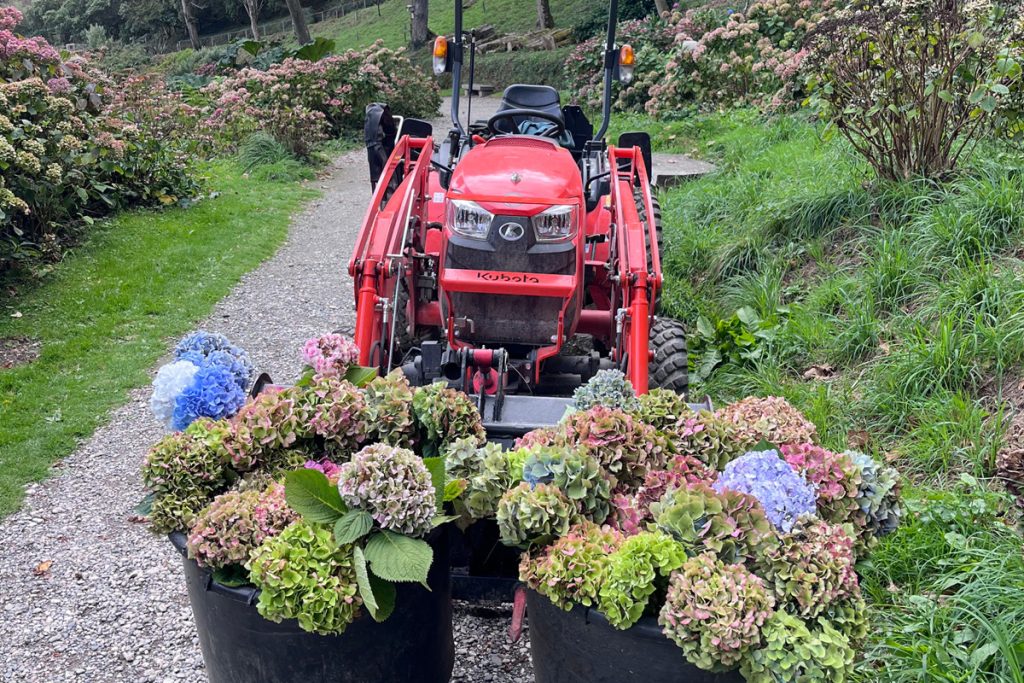
The first flower sighting of the Hydrangeas occurred this month which really marks the start of the summer season. These showy shrubs need a good amount of water to look their best and the name Hydrangea in Latin roughly translates as ‘water vessel’. As well as the large amount of water they need to stay healthy, the name actually comes from a botanist, Grovonius, who thought the flower looked like an ancient water pitcher. He combined the word ‘hydro’ meaning water and ‘angeion’ meaning barrel or pitcher to make Hydrangea as we still know them today.
We have been keeping the garden looking smart for an influx of visitors that comes with the warmer weather and holidays. We also have military day coming up this weekend so it’s all hands on deck to get everywhere ready for an even bigger footfall.
Calamity Climbers
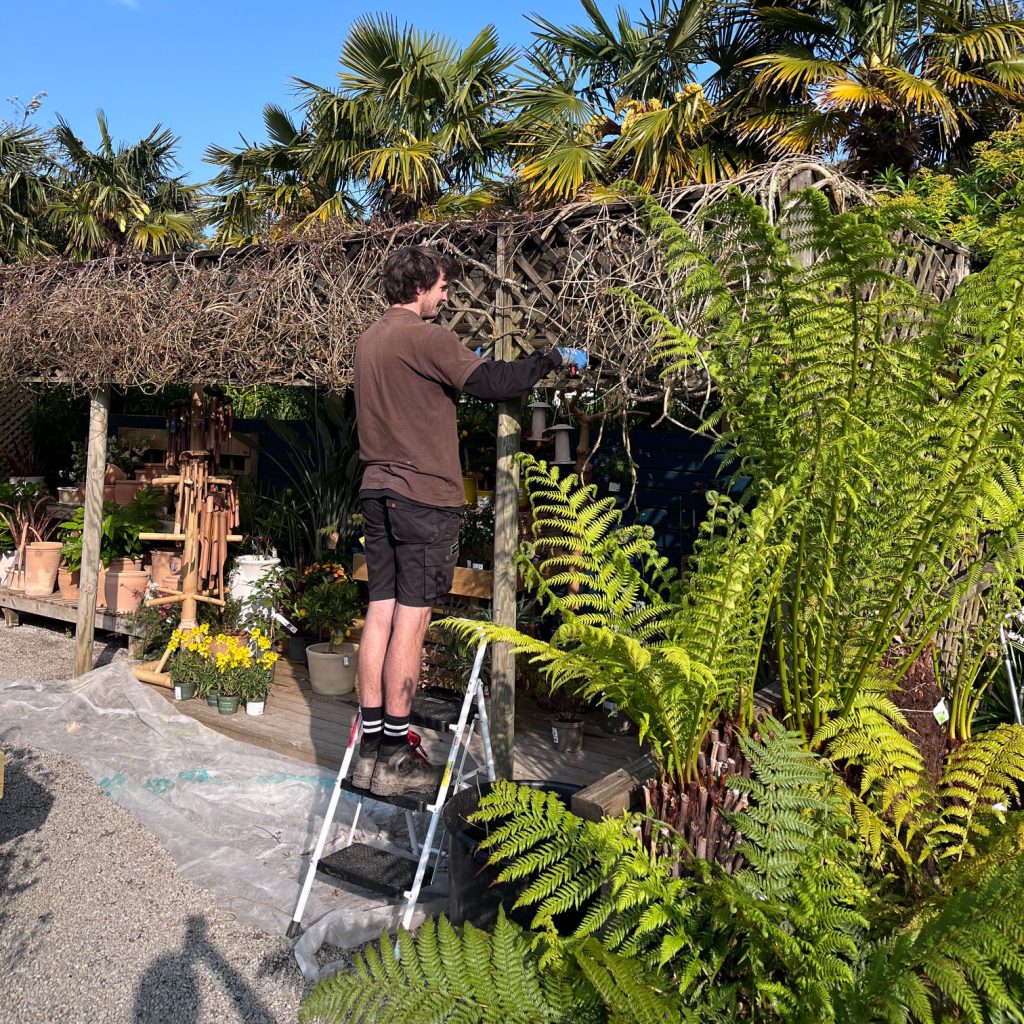
At the start of the month we removed a very old Clematis montana from the trellis in plant sales which had stopped flowering and begun to die. We couldn’t figure out why it had started to look a little worse for wear but we put it down simply to its age. Removing a dead climber is messy business so we put down sheets to catch most of the debris. It’s purely a case of cut and pull, slowly unravelling bits which have twisted round the fencing. Now this area is clear we can hopefully start off something new to live and long and healthy life here as this one did.
Goodbye Goretti
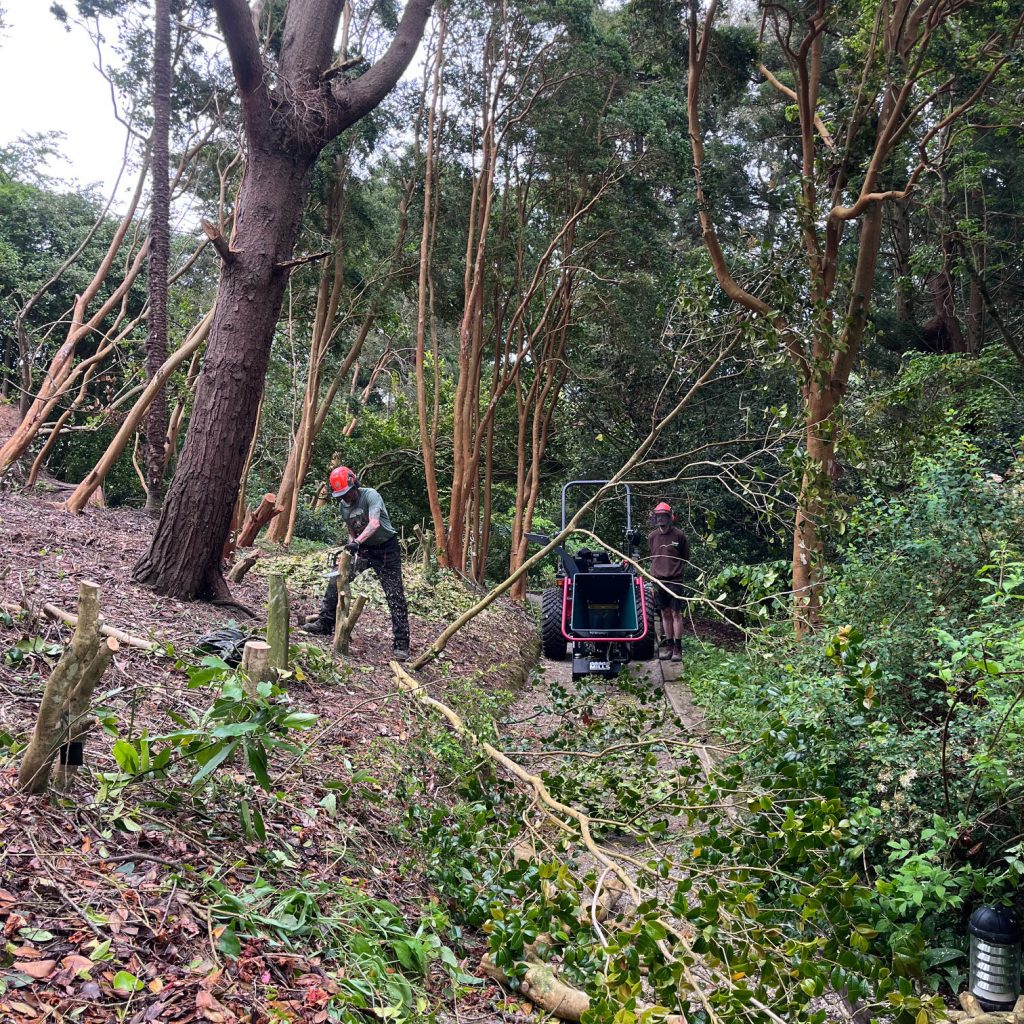
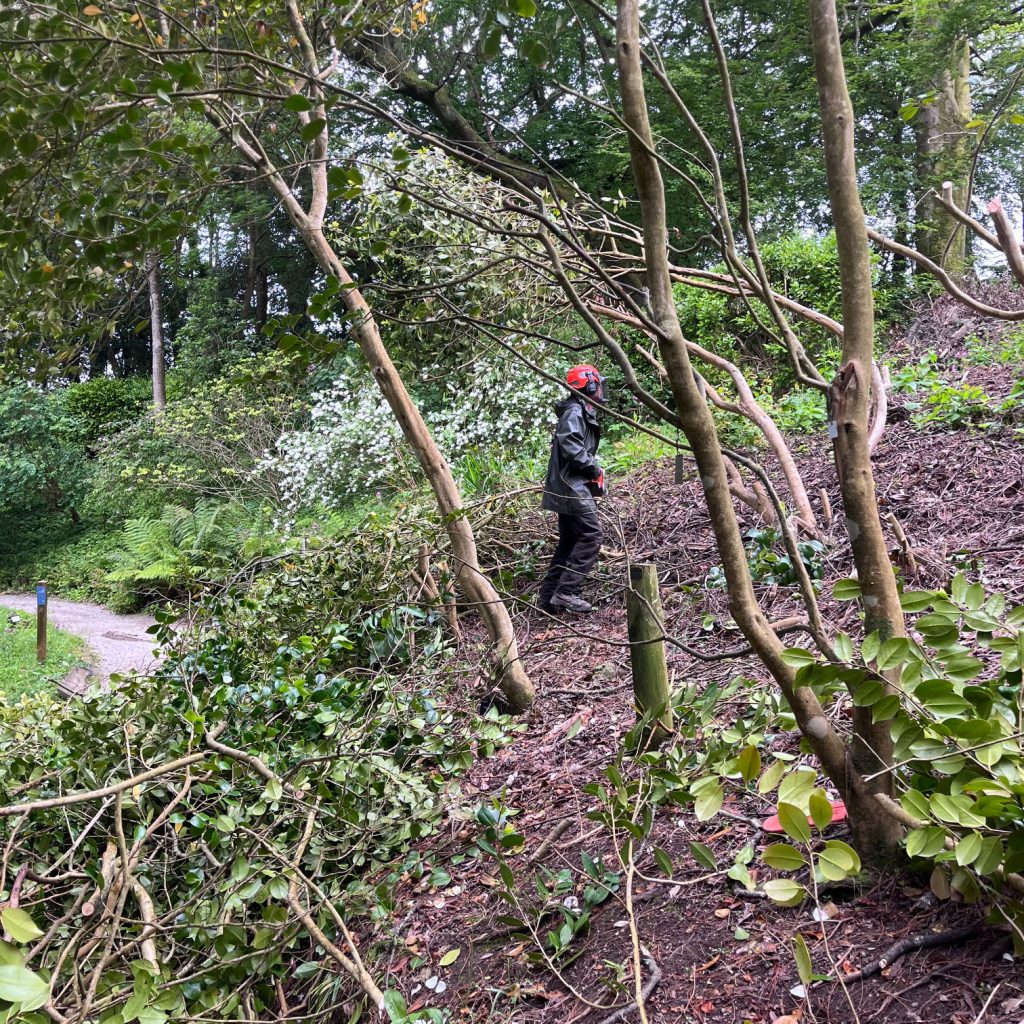
We finally finished pruning the last of the storm damage this month taking down some large Camellias overhanging Petry’s Path; sadly these towering shrubs were damaged and split by falling trees around them. Camellias can be pruned back extremely hard into old wood and still reshoot. We used a chainsaw to reduce the height down to a few feet, making clean cuts to encourage growth. The key to pruning anything is to use clean, sharp tools and make a neat cut, preferably on an angle to reduce the risk of standing water and rotting. Careful pruning helps reduce the risk of disease and encourages the plant to break with new shoots.
Once the Camellias were pruned we chipped the majority of the brash and lumber back onto the ground to act as a mulch, completing the circle of life for these lovely shrubs.
Hydrangea Management
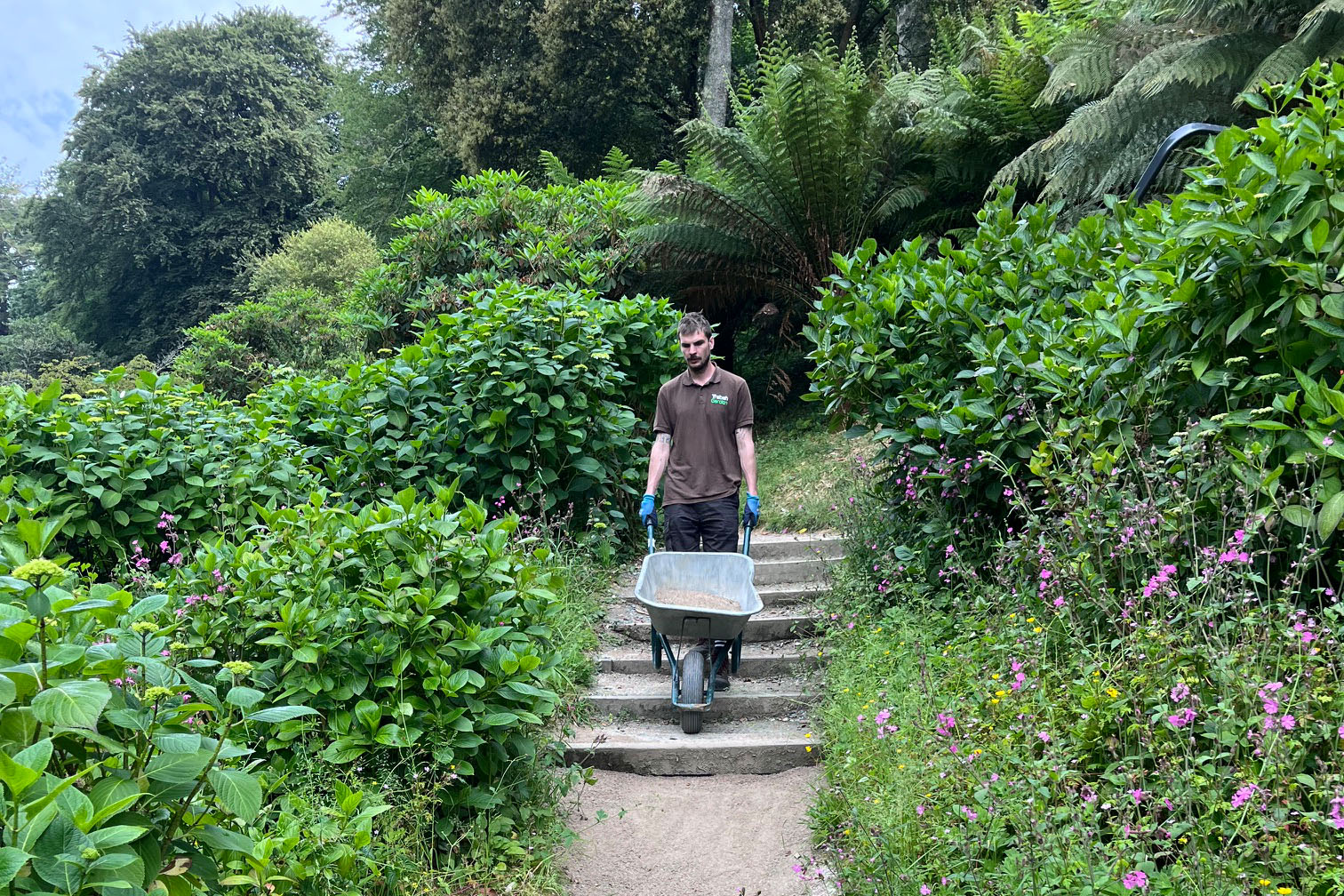
With the Hydrangea flowers in imminent arrival and the valley left to naturalise with wildflowers, we do have to keep a close eye on those pesky climbing weeds. Cleavers (Gallium aparine), sometimes known as ‘sticky weed’ are a rambling menace which tend to scale the Hydrangeas and other shrubs and plants. They have tiny hooked prickles which allow them to climb over other vegetation and dominate large areas. We go through the valley removing Cleaver and Bindweed (Calystegia sepium) which if left, would swamp our 2 acres of beautiful blooms.
Trimming the Tendrils
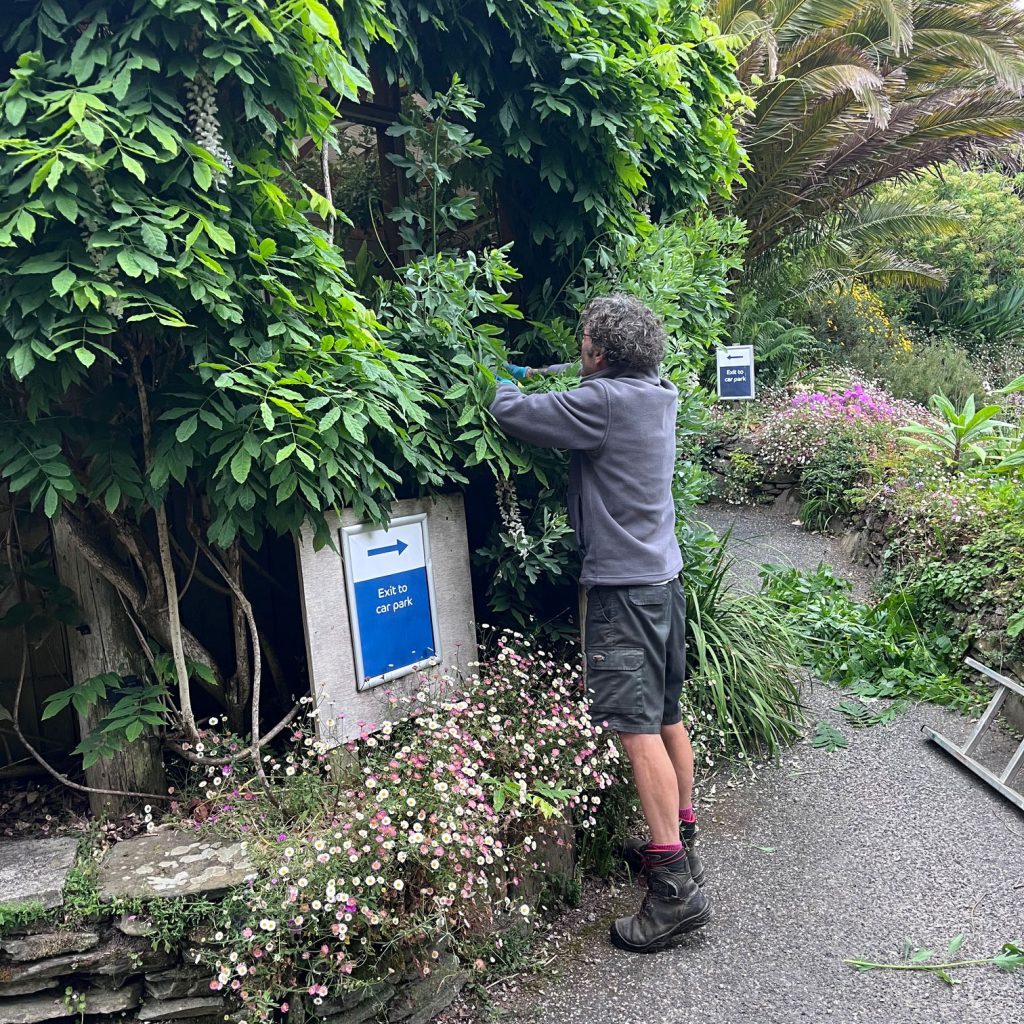
Our wonderful Wisteria around the conservatory has looked fantastic in recent weeks with its waterfalls of white flowers. Once flowering has finished, it is good practice to trim those long, creeping tendrils to keep the climber under control during the summer months, then give it a hard prune back to around 3 nodes in February to encourage flower bud development.
A never ending job
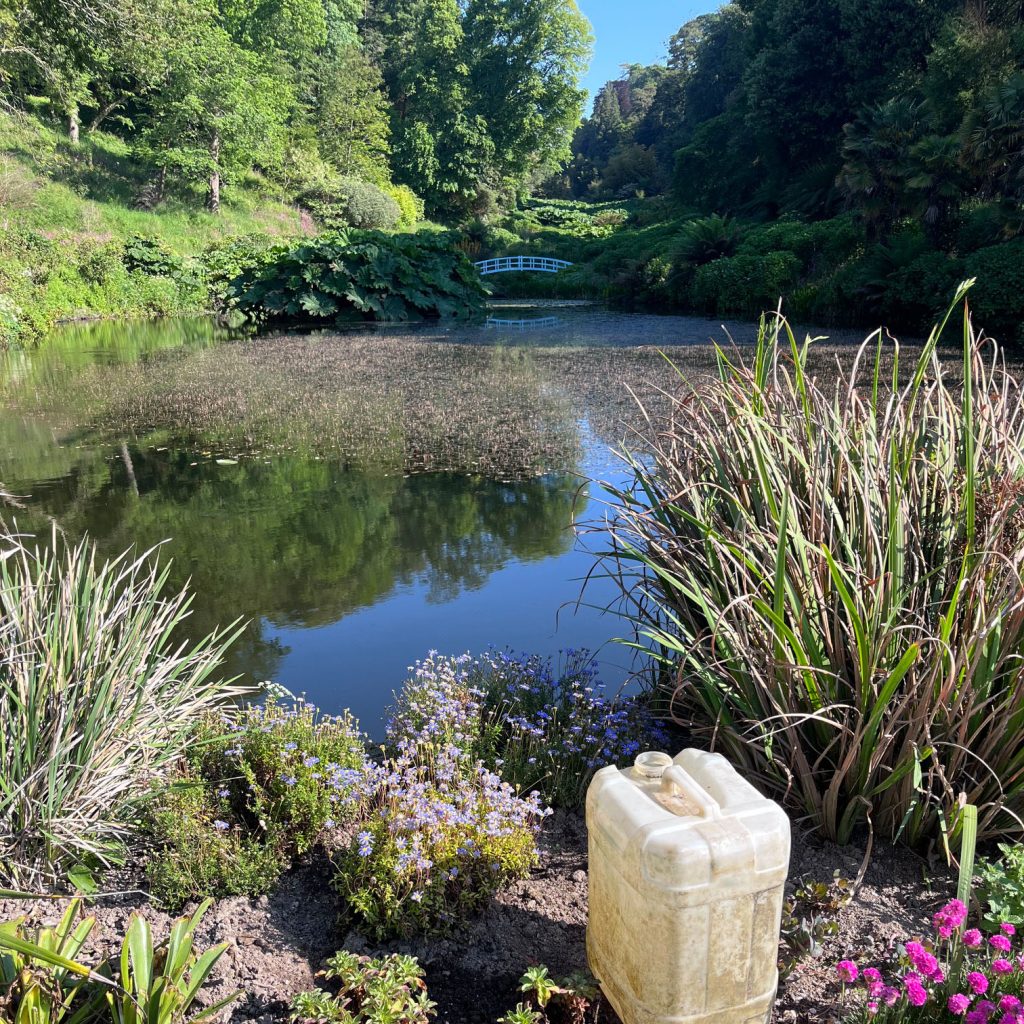
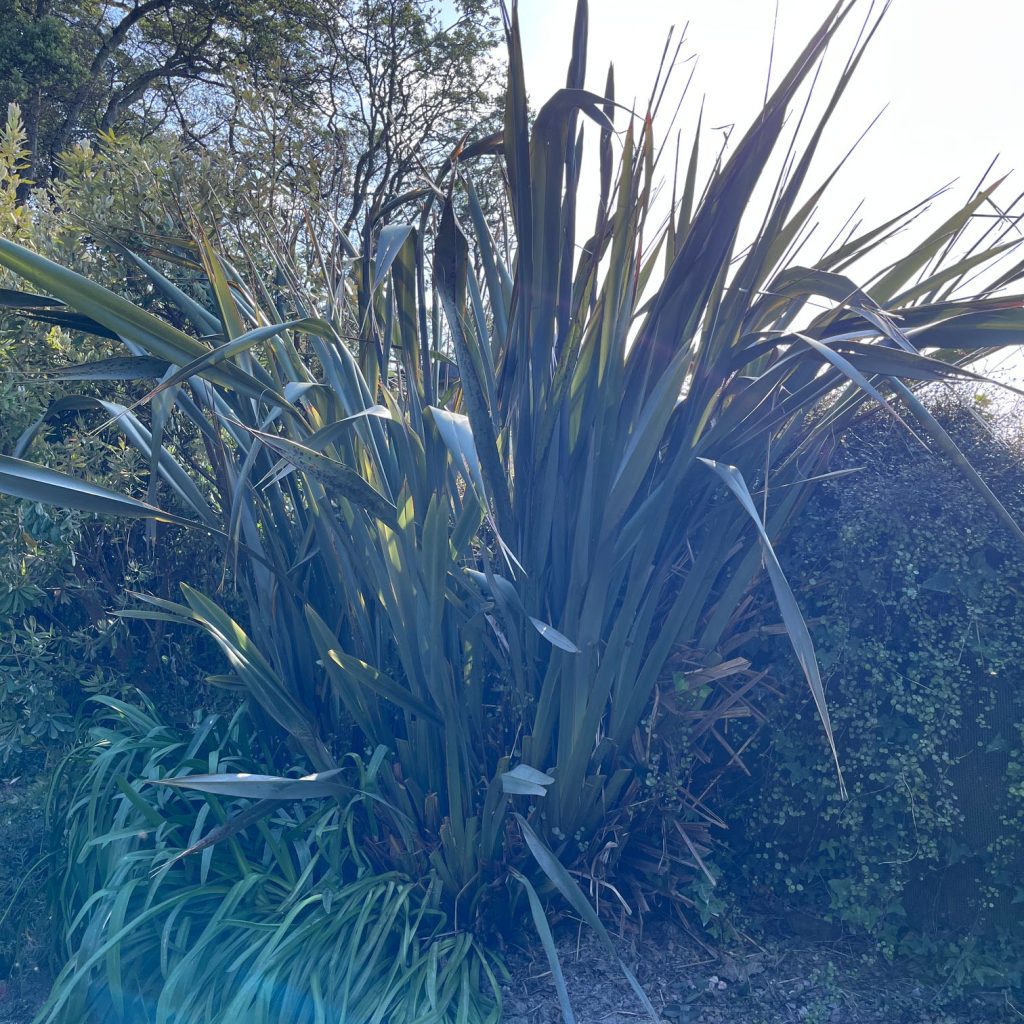
Our volunteers have been hard at work in the garden keeping the Mediterranean border tidy by the beach. This is one of the few herbaceous planting areas in the garden and one of the most photographed spots as people look back up the valley towards the house. The Phormiums have been neatly pruned and a few bits have been replanted where the previous Easterly winds had caused damage.
Wonderful wildlife
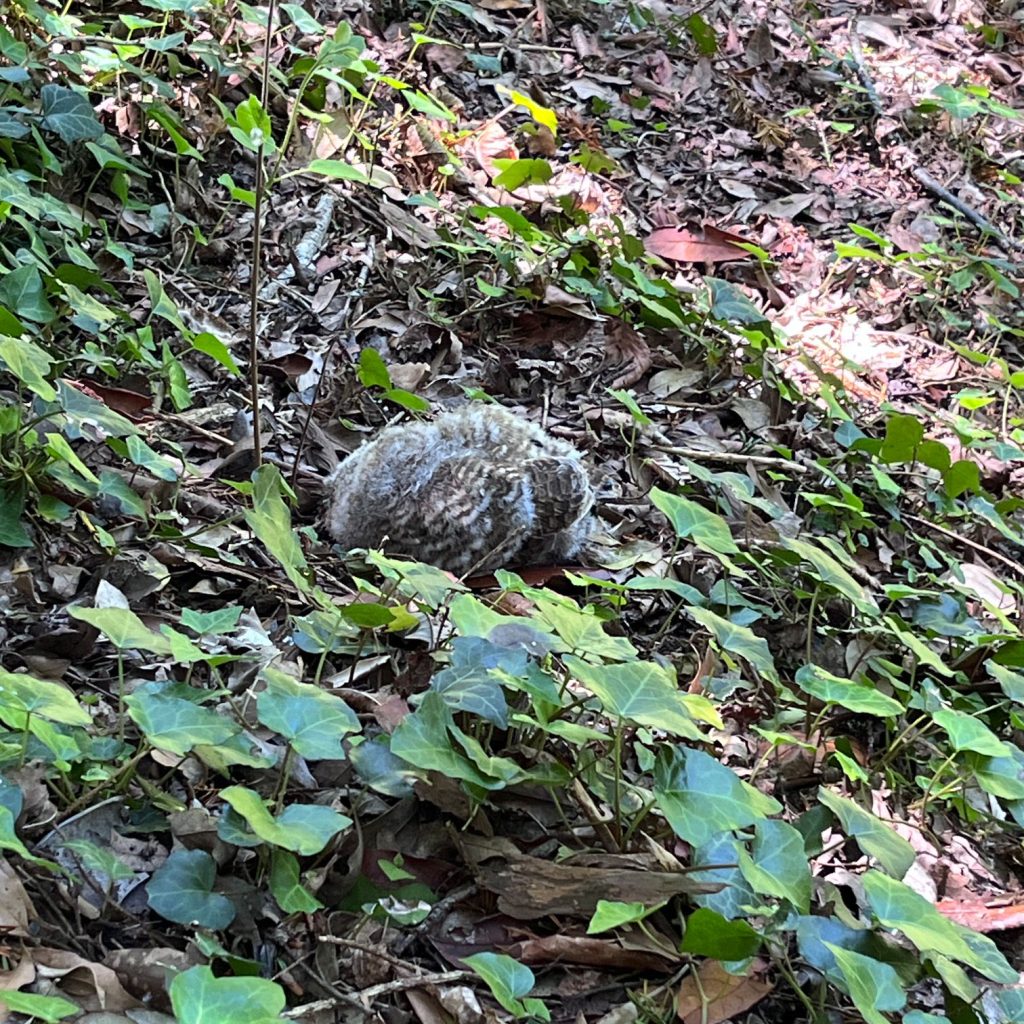
We have had some good wildlife encounters this month including reports of a baby owl on the ground along Laurel
Lane by some concerned members of the public. On investigation we found a sorry looking Tawny Owlet. After doing some investigation and contacting the Screech Owl Sanctuary, all recommendations suggested leaving the owlet where it is as it will continue to be fed on the ground and will even be encouraged back to the nest by its mum. The next day we cautiously went back to check and were happy to report that it had disappeared without a trace and we are hopeful they returned to the nest and will continue to be a welcomed Trebah resident.
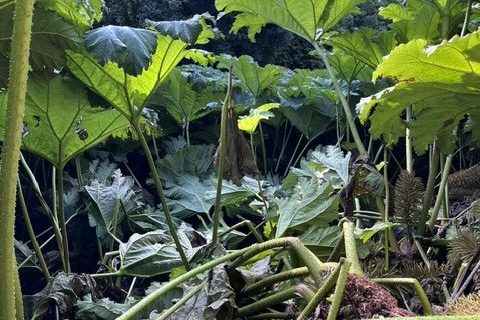
After the sunshine makes its continued appearance at Trebah, we look forward to seeing the valley bathed in blue, taking shade under the Gunnera Passage, and looking out over a turquoise blue Helford Estuary. Summer is coming and after such a wet and miserable winter, I’m optimistic for the warmer months ahead.