A sizzling July has left us with a few tricky things to navigate this month – hot, dry soil and hot, not so dry gardeners!
It’s been hot on the ground and not just for the plants but thankfully Trebah offers a considerable amount of shade; when it’s been needed, working in the sun has meant lots of water and even a few sea splashes to cool hot heads and hands.
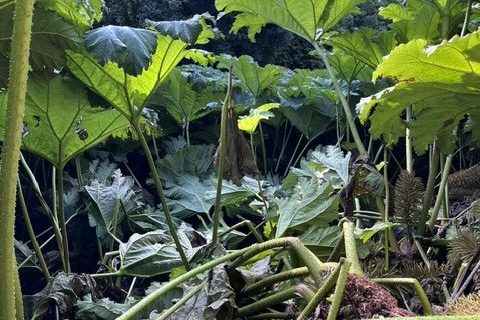
The plants have equally been suffering. If you walk along Davidia Path it looks as though we’ve had a visitor from the Jurassic world stumble through the Gunnera. These plants love moisture and without it their stems can become weak and snap as the heavy leaves lean over.
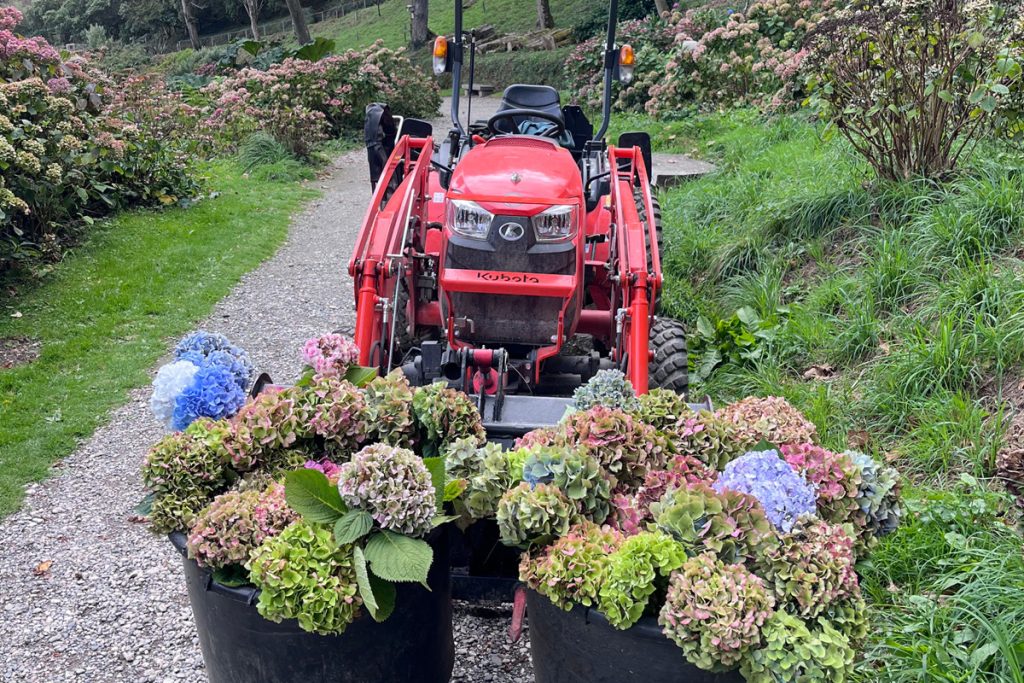
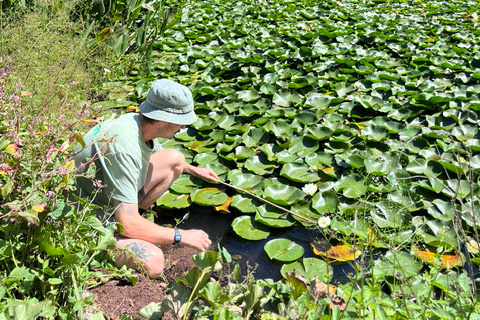
The Hydrangeas, which are super moisture-loving hence their name including a reference to water, have been struggling with the weather too. We don’t often water anything in the garden as usually with our unique micro climate and readily available water sources, it manages itself, however these last two weeks we have used the ponds and a pump to water any priority planting that have really been suffering.
With the head gardener just about resisting a rain dance, we welcome some evening rain to refresh the garden but long may the sun continue!
Wildflower Seeding
Strimming may not seem like the most environmentally friendly option for tackling the long grass around the garden but it is actually a really great way to disperse our wildflower seeds. With the banks bursting with gone-over Campions, Bluebells and Fox Gloves, strimming the stems casts seeds all over the bank, spreading them further for next spring and summer.
We go along before hand pulling out any brambles so that our native flowers have the most chance to thrive next year.
These areas are constantly changing with the weeks over spring and summer; the Daffodils are replaced by the Bluebells, followed by Campions and Fox Gloves. Each season changes the landscape with difference textures and colours. Finally at this time of year once everything is finished we begin strimming and dispersing the seed.
Cloud Pruning
We’ve been lucky enough to be joined by two international students over June and July, both of which have hugely helped in the garden. One of the jobs they undertook was pruning the Azalea Bank which involves being up to your waist in the Azalea, pruning with shears. We use cloud pruning but try and keep it as natural as possible to reflect the rest of the garden. Pruning these Azaleas this way at this time of year allows for maximum flowering.
These Azaleas are an important historic element of the garden as the plants come from descendants of the original ‘Wilson 50’; a set of evergreen Azaleas collected by esteemed plant hunter, Ernest Wilson, from Japan in 1919.

Beach maintenance
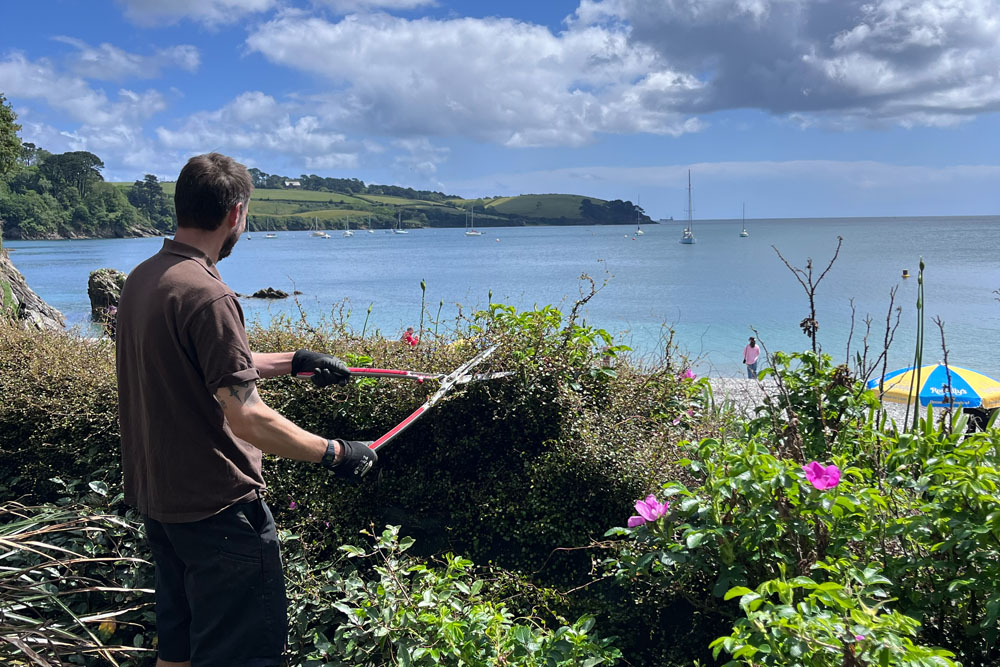
From time to time we escape the garden to maintain other areas. Each summer we take the hedge trimmer down the coast path between the bottom of the garden and the beach to keep everything from spilling over from the garden. We also get to weed amongst the Agapanthus on top of the wall on the beach which is probably the best office view I could think of. All of these little jobs go unnoticed but in doing them helps to keep the background of the garden and beyond running smoothly and looking its best.


Summer Pruning
This time of year we have our highest number of visitors as well as a high growth rate with the frequent sunshine (and usually rain!). Because of these points we need to hedge trim the huge Laurel hedge in the car park. It usually takes two of us the whole morning with an extendable trimmer and platform but is a very satisfying before and after.
We have also been trimming various other hedges and shrubs around the garden. Between spring and summer, hedge trimming is less advised due to nesting birds but often with the rate of growth from the plants it becomes necessary during late summer. Be cautious to check your hedge for any active nests prior to cutting; we wait until it is quite late in the season to minimise disturbance giving the local wildlife the best chance to fly the nest.

Big Butterfly Count
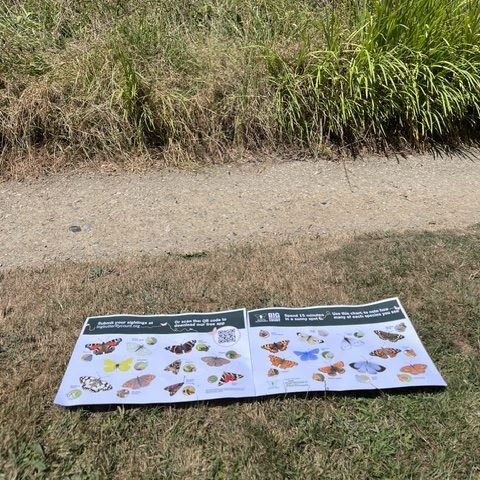
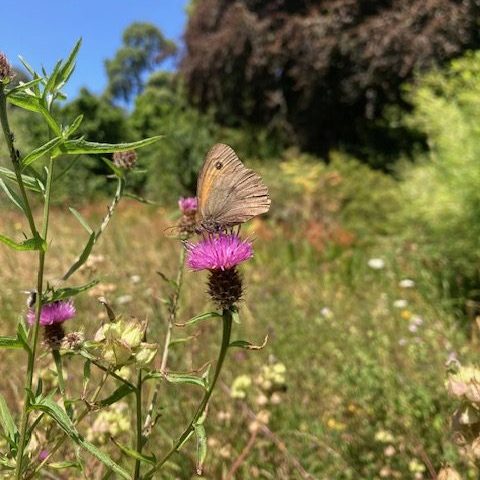
This year for the first time we have taken part in the Big Butterfly Count run by the Butterfly Conservation. Anyone can take part in this UK wide survey to help assess the health of our environment. With the conservation claiming we are in a ‘butterfly emergency’, now is the perfect time to sit down in a sunny spot for just 15 minutes and take part too.
We chose a bright spot in the garden with lots of wildflowers and spent our time spotting and identifying 21 butterflies with 7 different species! It’s a really great way to escape the noise of the world for 15 minutes and let the most important thing you have to think about be identifying a Large White from a Green Veined White. Encourage your family, children, parents, brothers, uncles and everyone in between to do the same. Log your results in the Big Butterfly Survey website and let’s fight the butterfly emergency together. Ecology and conservation should be conversations we are all having because there’s no world without nature.
So after a very dry July, besides looking a little droopy, the garden is still looking its amazing self thanks to the care of the team, our volunteers and students. With the possibilities of changing climates in the future, Trebah may look like a whole different garden some day and we will have to continue to adapt our planting and methods of horticulture as we go. Hopefully though we all care about the planet enough to make changes that slow those climate effects down or even put a stop to them in the future.
Trebah Watch
This month is a collection of Badger videos captured on our trail camera over a period of a couple of years.