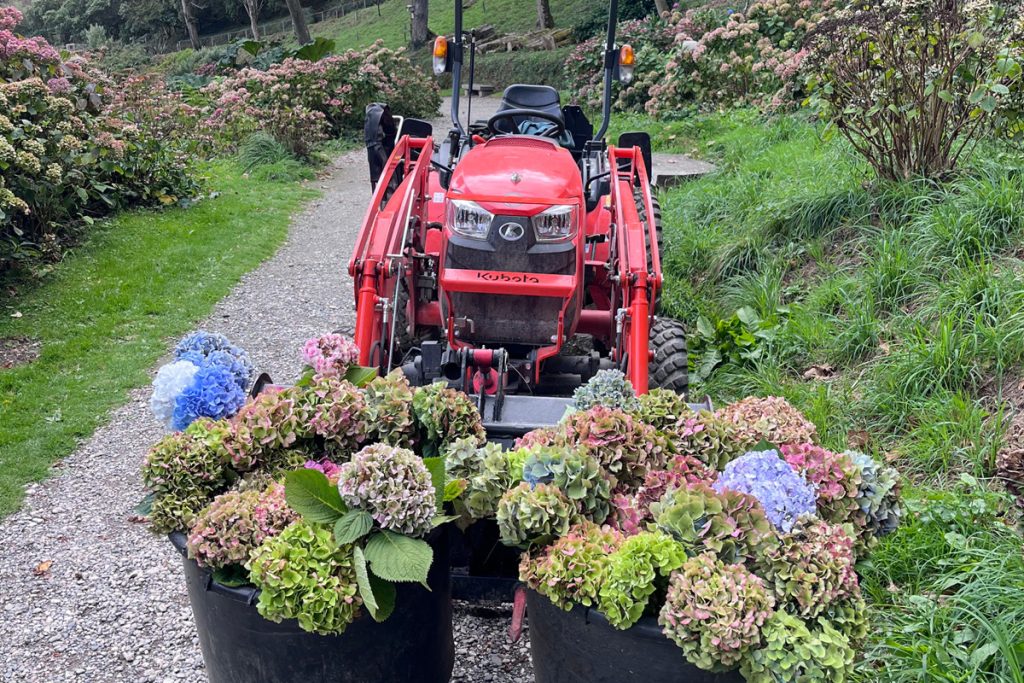
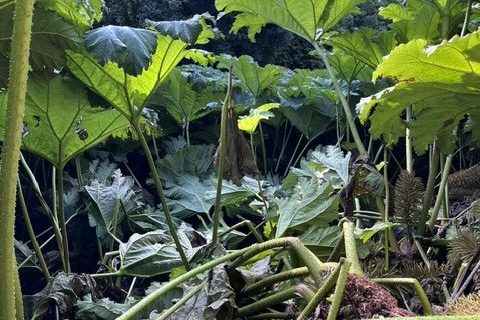
As the summer holidays continue it’s been another busy month here at Trebah with finally a sprinkling of rain!
We’re up to over 30mm of rain for this month which has been the first drops since the end of June. As soon as the Hydrangeas feel any kind of moisture they seem to spring back to life but sadly it isn’t quite the same for the Tree Ferns as you’ll read about later on.
It has very much been a case of trying our best to maintain the presentation of the garden whilst fighting against droopy stems, crispy fronds and floppy leaves this summer. As a gardener who sees and breathes the garden year round, carefully tending to keep it looking it’s best, it is hard to stand back and see it looking stressed and not quite itself. It is important to remember however that each and every natural space looks and feels the same right now given the extreme weather we have been experiencing across the county, and it is also important to remember that a little rain goes a long way. We have already seen a difference following some decent rainfall and careful pruning in the landscape over the last fortnight alone which gives us hope for our plants. Trebah already looks fresher and feels greener and that is only going to improve come Autumn.
Tree Fern Trouble
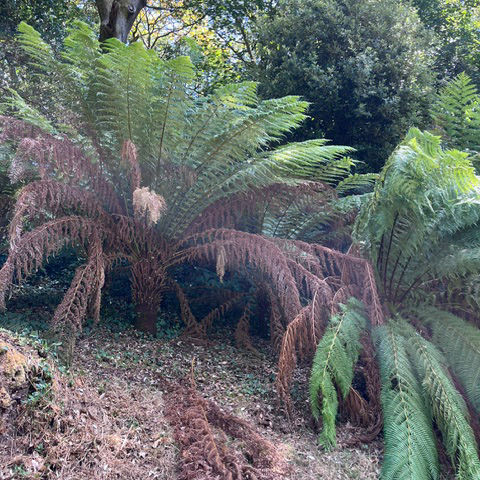
Tree Ferns originate from a few different places with the majority coming from the Southern hemisphere and South East Asia. Despite the number of different native locations, their common habitat conditions are the same: moist, sheltered and avoidant of extremes in temperature. This means that the scorching temperatures coupled with very limited rainfall has had damaging effects.
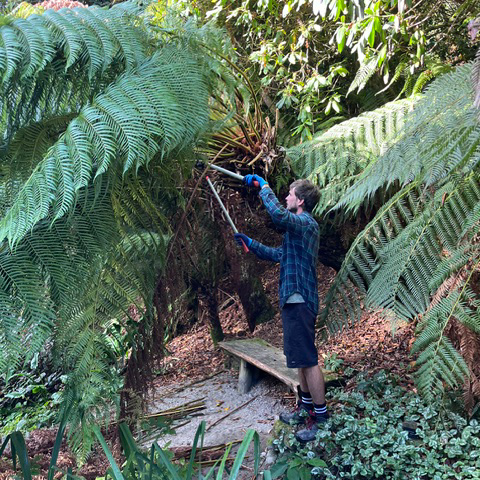
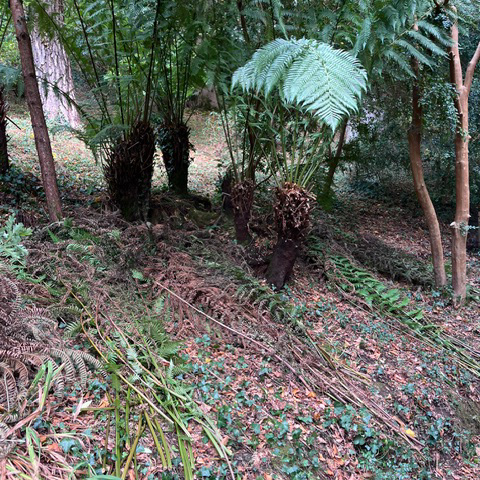
Tree Fern trunks are actually made of roots and rhizomes which is why they thrive in humidity and dislike dry conditions. The trunk and crown require almost constant moisture to maintain healthy green fronds; lots of ours around the garden are now drooping and dry, completely turning brown on many. We, alongside our volunteers have spent lots of time this month pruning out dead fronds to make the garden look more tidy and it’s amazing the difference it makes. Some of the trunks are completely without fronds now so we are waiting in hope that more return as Autumn brings damper weather. During the driest time we even had to water the crowns and trunks of some of our rarer species in the Stumpery which seems to have helped but obviously isn’t a realistic solution for most around the garden due to the quantity and available water sources.
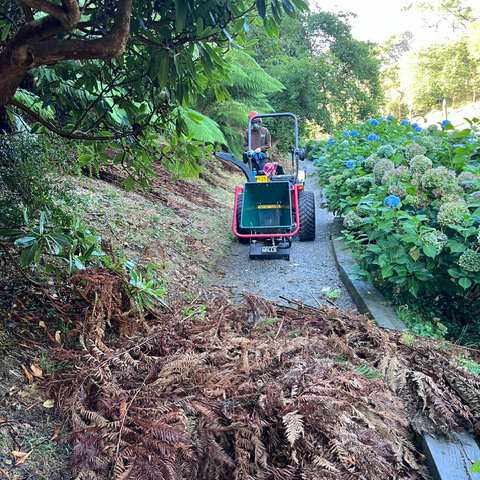
The positive to this Tree Fern tragedy is that we have been chipping lots of the dead fronds which has been filling up our compost bay nicely although it definitely requires a dust mask.
Emergency Tree Works
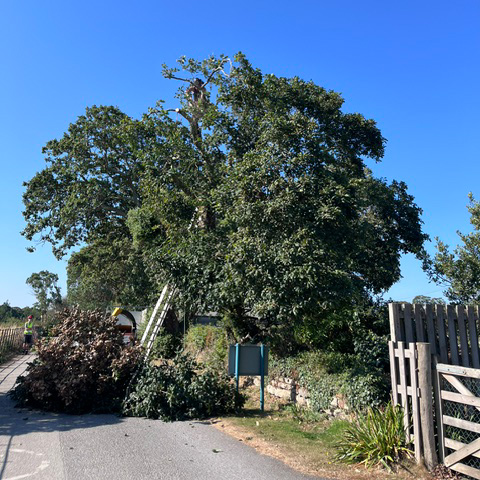
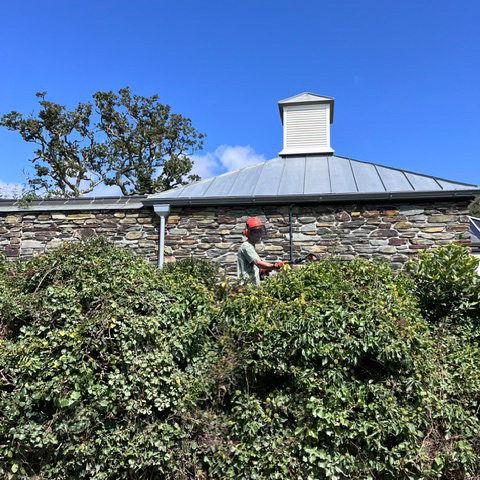
After finding a damaged branch overhanging the entrance we managed to get in touch with our tree surgeon to come in and complete the emergency work which thankfully is prioritised over their constant demand for routine tree surgery.
After a discussion regarding the best way to prune the Oak to maintain a balanced, even but safe crown, he then reduced the appropriate branches back in between us marshaling the entrance. All the brash was chipped and we took away a tractor load of timber all before the garden got into full swing.
Clipping around the Koi Pool
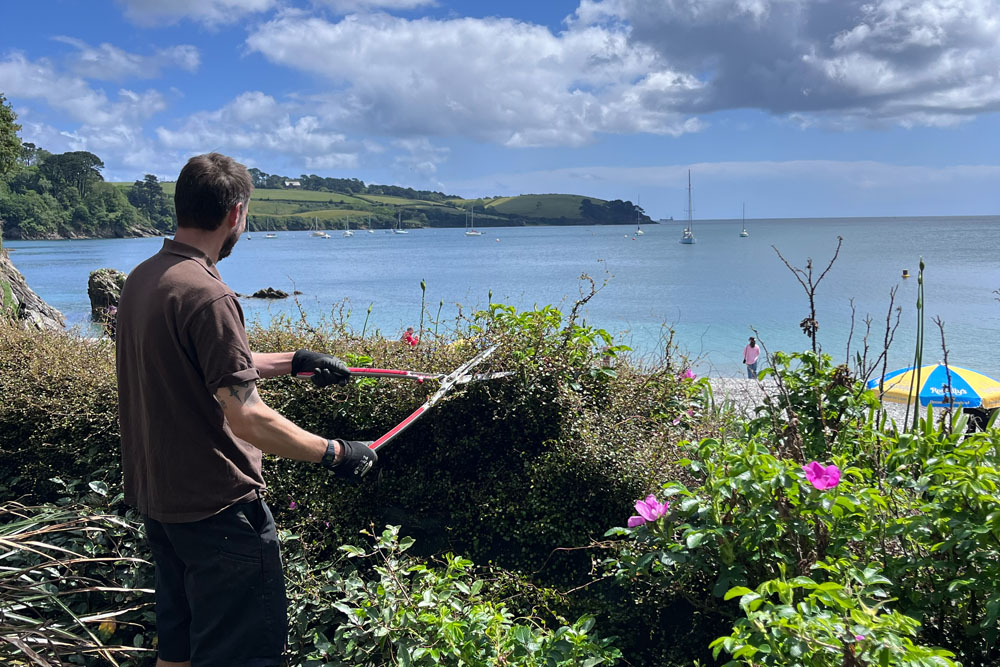
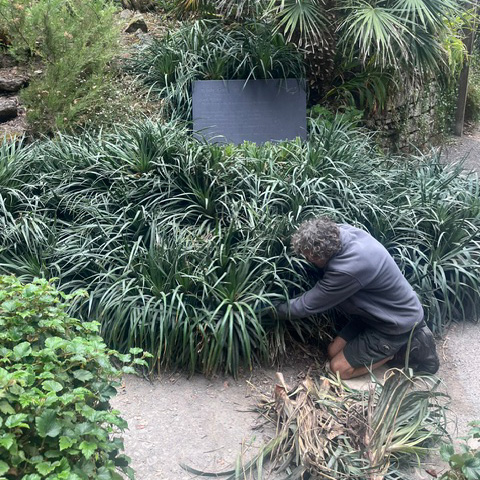
We have been clearing the Fascicularia bi-colour around the Koi Pool to raise it off the ground, making the area more accessible and tidy. Often leaves like to find themselves hanging around underneath so to make maintenance easier we risked the spikey foliage to cut them back to the wall with a saw. Whilst clearing the area we also reduced the Rubus Tri-colour growing around the pond now that it has finished flowering to keep it under control due to its creeping habit.
Nature Prevails
To say the hot weather we have had, the borders in the Court Garden are still looking fantastic and bursting with colour and life. I counted so many butterflies floating around this week who are absolutely loving the Verbena bonariensis which is a great addition to your garden to attract pollinators. We also had a visit to our Verbena by the house terrace from a Hummingbird Hawk Moth. Keep your eyes peeled for these elusive and spectacular insects; they are extremely quick so don’t waste time trying to snap a photo and just enjoy a brief encounter with this marvellous mini beast.
Hummingbird Hawk Moths are not classified as rare but sightings vary massively year on year depending on conditions in their native regions such as wind or heat. They visit Southern England for a summer holiday, mainly from the Mediterranean but sometimes even travelling from as far as Northern Africa! – I’m sure arriving at Trebah makes up for the lengthy commute though.
They are easier to spot than most moths because they fly in the day time and have a distinctive hummingbird style.
A Special Visitor
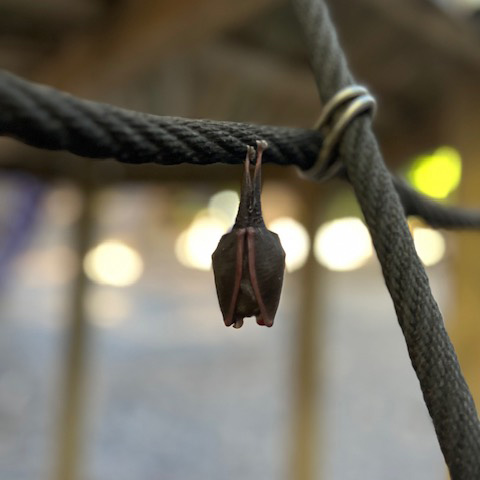
We had a very special visitor to Tarzan’s Camp this summer, spotted by a sharp-eyed visitor. On the rope ladder in the play area we found a sleeping bat, appreciating the space from upside down!
As we knew not to touch or disturb the creature without specialist advice, we closed Tarzan’s Camp to give them some peace and quiet; a rope ladder isn’t exactly 5 star luxury with the risk of little feet excitedly bouncing up and down.
After speaking to the experts we were able to gentle remove the bat and release it at dusk safely and responsibly following strict guidance, allowing them to continue enjoying the garden from a slightly more appropriate and natural hang out.
Horticultural Research
As gardeners, we are curious about all things natural world; an unusual fungi provides a whimsical, childlike intrigue, and a mysterious creepy crawly leaves us desperate to identify and learn more. It is a brilliant way to see the world I think, constantly engaged by the place we live, however small a curiosity, and always searching for answers and knowledge in nature.
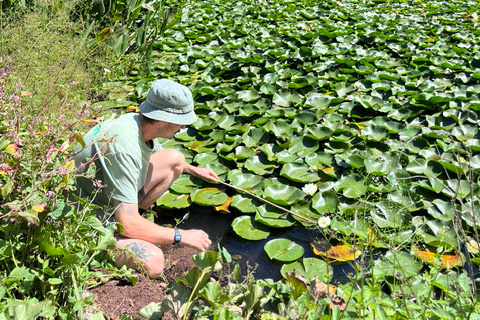
This month that meant an investigative mission to get up close to Nymphaea alba, the common Water-Lily. It all came about whilst researching the latest plants for the ‘Looking Good in the Garden’ board where we were highlighting the glorious Water-Lillies on Mallard pond. One of the team noticed whilst researching that apparently Water-Lillies have a sweet, fresh sent – news to us! Our opinion is that if we are giving out information to you, the visitors, we first had to check that what we were saying was right. With that, off we went with a long piece of Bamboo and a temporary removal of boots and socks to get confirmation that Nymphaea are in fact scented, although between numerous noses we couldn’t quite agree on of what.
So with a very hot start to the month, followed by some much needed rain, lots of pruning, tidying and maintenance, the garden is coming back to life once again.
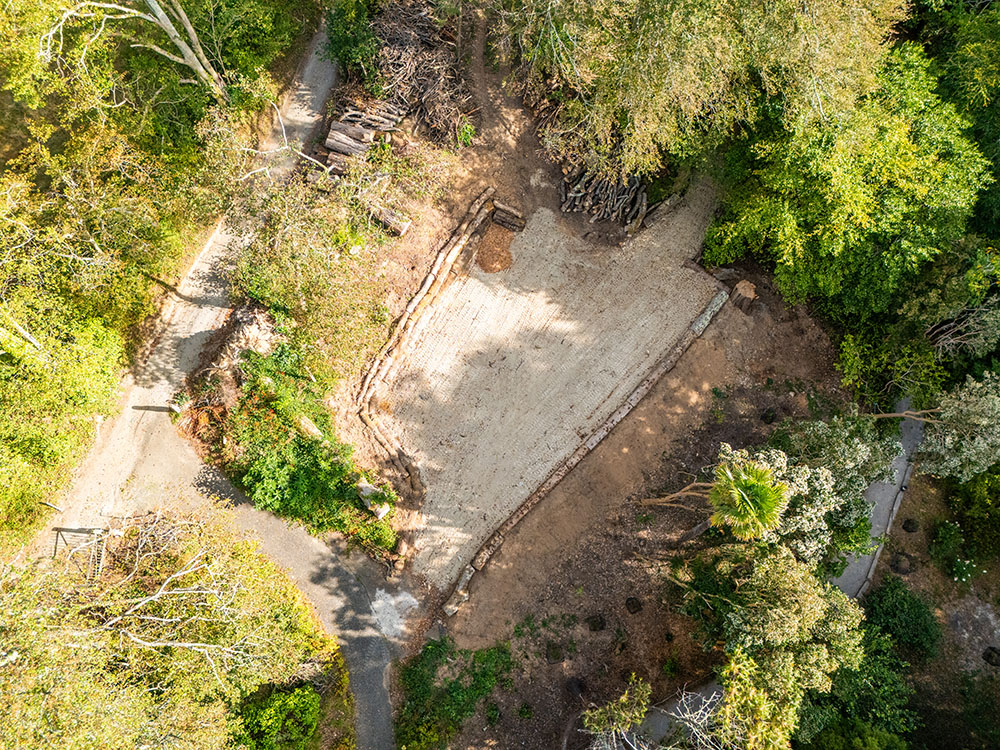
With big plans along Petry’s Path to redevelop the area devastated by Storm Goretti, the garden is rebuilding and healing as we slowly descend into Autumn. Signs of strength prevail in the re-shooting of shrubs damaged by the fallen trees as Clethra begins to grow again. This area at the beginning of the year, totally transformed through violent weather is re-staking its claim and showing purpose. It has also made way for new projects and ideas which will be unveiled in Spring.
We seem to have survived the very extremes of weather this year, enduring a very wet and wild winter, followed by a scorching summer but it looks as though we are hopefully coming out the other side. We will always endure, adapt and overcome but the climate is changing and we must change with it. The Earth can appear to have a tough exterior but it can also be fragile. We must do everything we can to maintain the beauty this planet graces us with and protect this curious natural world we are so lucky to live in.